
Insurance. Just the word alone can make anyone’s head spin. With so many options, plans, and fine print, figuring out what’s right for you can feel like solving a Rubik’s Cube blindfolded. Among the most common—and most debated—types are term life insurance and whole life insurance. Understanding their differences can save you money, stress, and a lot of unnecessary headaches.
In this article, we’ll break down term vs whole life insurance, explain their pros and cons, and help you figure out which might be the better choice for your lifestyle and financial goals.
What is Life Insurance Anyway?
Before diving into the debate, let’s take a step back. Life insurance is essentially a safety net. You pay a company a certain amount of money regularly (called a premium), and in return, they promise to pay your beneficiaries a set amount of money (called the death benefit) if you pass away.
Life insurance isn’t just about leaving money behind; it can cover funeral costs, debts, mortgage payments, and even serve as a financial foundation for your family’s future.
Now, there are multiple types of life insurance, but the two that often confuse people are term life insurance and whole life insurance. Let’s break them down.
Term Life Insurance: The Basics
Term life insurance is exactly what it sounds like: insurance for a specific term or period of time. Common terms are 10, 20, or 30 years. If you pass away during that term, your beneficiaries receive the death benefit. If you outlive the term, the coverage ends—unless you renew or convert it.
Key Features of Term Life Insurance
-
Affordable Premiums: Term insurance tends to be cheaper than whole life because it’s temporary and doesn’t have an investment component.
-
Fixed Term: Coverage is for a set number of years, which you choose based on your needs.
-
Death Benefit Only: It doesn’t accumulate cash value; it’s purely a safety net.
-
Renewable Option: Many term policies allow you to renew, but usually at a higher premium.
Think of it as renting insurance. You pay for protection while you need it most—like during your mortgage years or while your kids are dependents.
Whole Life Insurance: The Basics
Whole life insurance, also known as permanent life insurance, is a lifelong policy. It doesn’t expire as long as you keep paying the premiums. Beyond just the death benefit, whole life insurance has a cash value component that grows over time.
Key Features of Whole Life Insurance
-
Lifelong Coverage: You’re covered for life, provided premiums are paid.
-
Cash Value Accumulation: Part of your premium goes into an investment-like account, growing tax-deferred.
-
Fixed Premiums: Premiums typically stay the same for life.
-
More Expensive: Because of the lifelong coverage and cash value, premiums are higher than term insurance.
Whole life insurance is more like buying a home—you’re making a long-term investment that grows in value over time.
Comparing Term vs Whole Life Insurance
Let’s put the two side by side to see their main differences.
| Feature | Term Life Insurance | Whole Life Insurance |
|---|---|---|
| Coverage Length | Specific term (10-30 years) | Lifetime |
| Premiums | Low and affordable | High and permanent |
| Death Benefit | Fixed during term | Fixed and guaranteed |
| Cash Value | None | Yes, grows over time |
| Investment Component | None | Yes, part of premium builds cash value |
| Best For | Temporary needs, budget-conscious | Long-term security, estate planning |
| Flexibility | Can convert or renew | Less flexible, more structured |
From this table, it’s clear: term is simpler and cheaper, while whole life is more complex and expensive but offers extra financial benefits.
Pros and Cons of Term Life Insurance
Understanding the advantages and disadvantages can make your decision easier.
Pros
-
Affordable: Ideal for young families or people on a budget.
-
Simple: Easy to understand with no investment component.
-
Customizable Term: Choose the duration based on your current financial needs.
-
Convertible: Some policies allow conversion to whole life insurance later.
Cons
-
Temporary: Once the term ends, so does your coverage.
-
No Cash Value: You can’t borrow from it or use it as an investment.
-
Increasing Cost if Renewed: Premiums can rise if you renew after the term ends.
In short, term life insurance is like renting protection—you get what you need for a set time without any long-term financial commitment.
Pros and Cons of Whole Life Insurance
Whole life insurance is more than just a safety net; it’s also a financial tool. But it comes with its own set of trade-offs.
Pros
-
Lifetime Coverage: You’re covered no matter when life ends.
-
Cash Value Growth: Provides a financial resource you can borrow against.
-
Fixed Premiums: Stable and predictable payments.
-
Estate Planning Tool: Useful for leaving a guaranteed inheritance or covering estate taxes.
Cons
-
Expensive: Higher premiums can strain budgets.
-
Complex: Policies can be confusing, especially with cash value options.
-
Less Flexibility: Difficult to adjust coverage without financial consequences.
-
Returns May Be Modest: Cash value grows slowly and may not outperform other investments.
Whole life insurance is like buying a car with a long warranty and an investment plan—it costs more upfront but offers long-term security.
How to Decide Between Term and Whole Life Insurance
Choosing between term and whole life insurance comes down to your goals, finances, and family situation. Here’s a practical guide:
1. Assess Your Financial Needs
-
Are you looking to cover temporary responsibilities like a mortgage, children’s education, or debts? Term insurance might be enough.
-
Do you want permanent coverage that can also serve as a savings or investment tool? Whole life might be better.
2. Evaluate Your Budget
-
Term insurance is budget-friendly and ideal for most families starting out.
-
Whole life is a long-term commitment; make sure you can comfortably pay the higher premiums.
3. Consider Your Age
-
Young adults may prefer term insurance because they want coverage for a finite period.
-
Older adults or those with long-term estate planning needs may find whole life insurance more suitable.
4. Future Plans
-
If you expect your financial responsibilities to decrease (kids grown, mortgage paid off), term insurance could be enough.
-
If you want lifelong coverage for legacy purposes or as an investment, whole life insurance fits better.
Scenario Examples
Sometimes, real-life examples make things click.
Scenario 1: Young Family
-
Age: 30
-
Kids: 2
-
Mortgage: $250,000
Needs: Coverage until kids are independent and mortgage is paid.
Best Choice: Term life insurance (20–30 year term)
Why: Affordable, covers major responsibilities, can convert later if needed.
Scenario 2: High-Income Professional Planning Estate
-
Age: 45
-
Kids: 1 college-aged
-
Estate Value: $2 million
Needs: Lifelong coverage and legacy planning.
Best Choice: Whole life insurance
Why: Guarantees lifelong protection, builds cash value, helps with estate taxes.
Scenario 3: Budget-Conscious Individual
-
Age: 28
-
Single, no dependents
Needs: Basic protection in case something unexpected happens.
Best Choice: Term life insurance
Why: Cheap, straightforward, and covers essential needs without straining budget.
Term vs Whole Life Insurance: Common Misconceptions
Understanding myths can help prevent costly mistakes.
-
“Term insurance is wasted money if you outlive it.”
Not true! It’s protection you paid for when you needed it most. Think of it as peace of mind, not lost cash. -
“Whole life insurance is always a good investment.”
Not necessarily. Cash value growth is slow, and there are often fees. Other investments might yield higher returns. -
“I need both types.”
Sometimes, yes. Some families use “blended” insurance strategies: term for immediate needs, whole life for long-term security.
Blended Strategies: Why Not Both?
If you have the budget and complex needs, combining term and whole life insurance can be smart:
-
Term insurance: Covers short-term needs like a mortgage or college tuition.
-
Whole life insurance: Provides permanent coverage and cash value growth.
This approach can offer flexibility, cost efficiency, and long-term financial benefits.
Questions to Ask Before Buying Life Insurance
Before signing on the dotted line, ask yourself:
-
What’s my budget for monthly premiums?
-
How long do I need coverage?
-
Do I want my policy to act as a savings/investment tool?
-
Can I handle higher premiums for lifelong coverage?
-
Do I have existing policies or employer-provided insurance?
These questions help clarify whether term or whole life—or a mix—fits your situation.
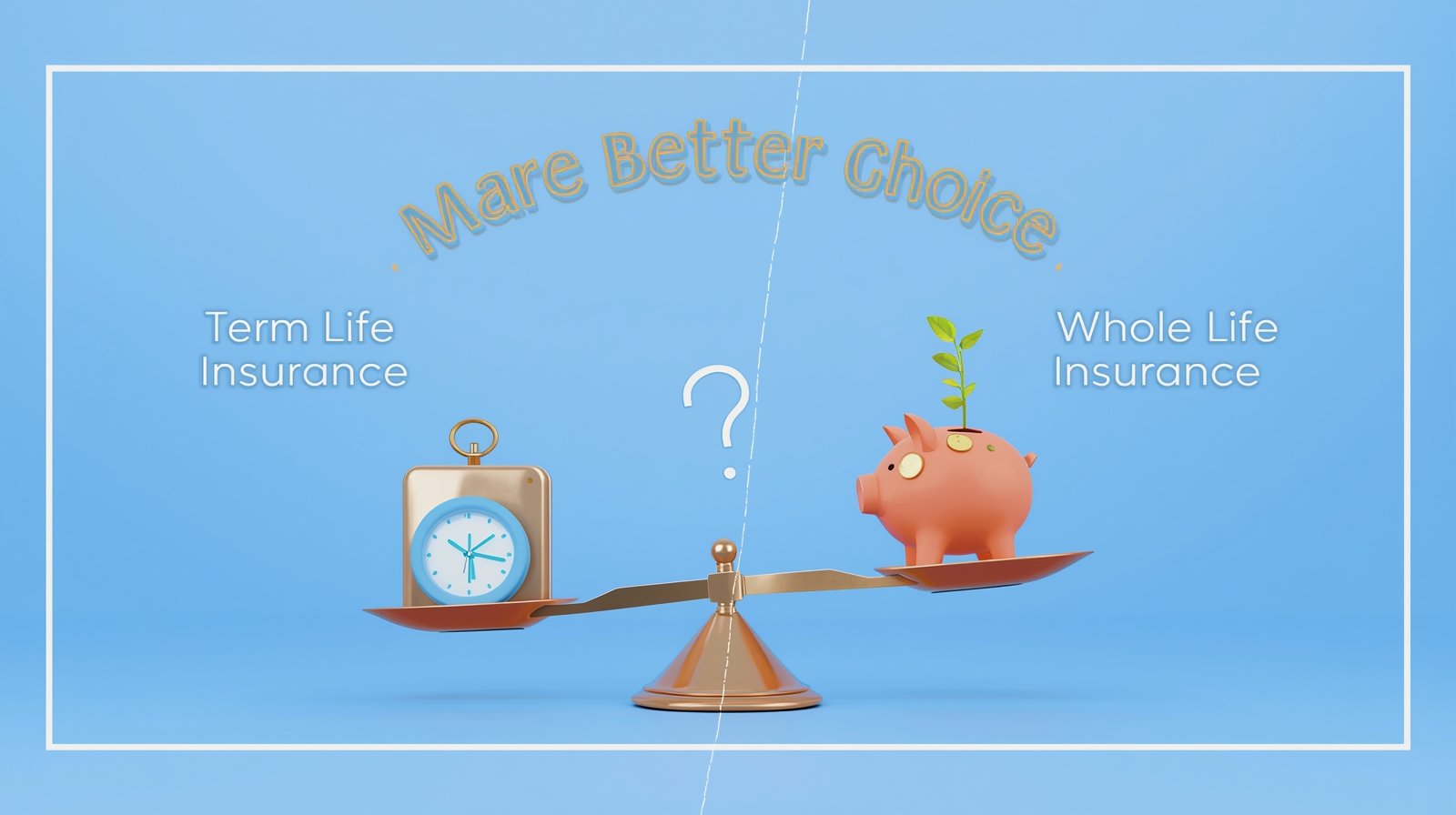
Final Thoughts: Term vs Whole Life Insurance
Choosing the right life insurance isn’t about one being “better” than the other—it’s about what’s right for you and your family.
-
Term life insurance is perfect for most people seeking affordable coverage for a specific period. It’s straightforward, cheap, and flexible.
-
Whole life insurance suits those who want permanent protection, an investment component, or estate-planning benefits. It’s more expensive, but it offers lifelong security.
Ultimately, understanding your financial goals, responsibilities, and budget is the key to making a wise choice.